
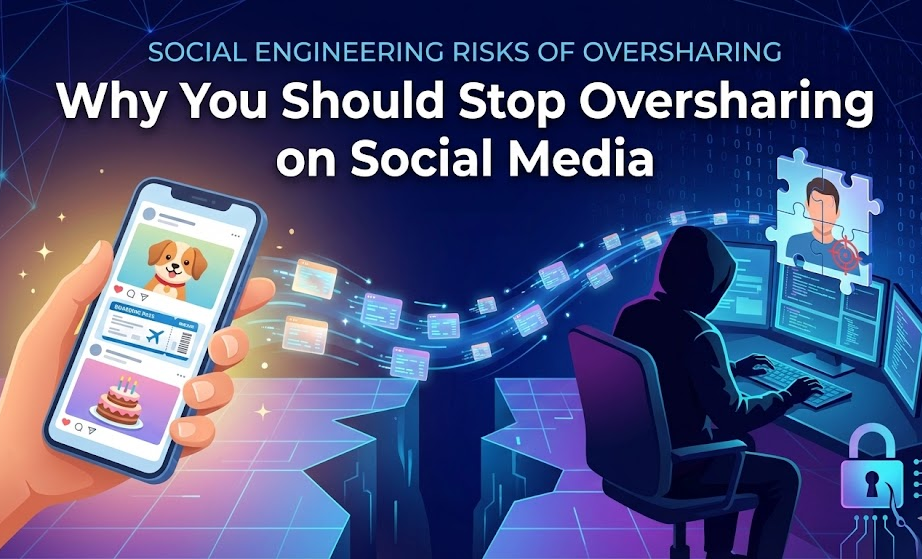
We all love the dopamine hit of a new “like.” Whether it’s a photo of your boarding pass before a dream vacation or a cute snapshot of your new puppy, sharing our lives online feels natural. It’s how we connect.
But there is a dark side to this constant stream of updates. While you see innocent memories, cybercriminals see something else entirely: a goldmine of data.
The detailed map of your life you are building is the primary fuel for social engineering risks. In this post, we’ll explain why your “TMI” (Too Much Information) habit might be your biggest cybersecurity weakness.
What Is Social Engineering?
Before we dive into the risks, let’s define the threat. Social engineering isn’t about hacking computers; it’s about hacking humans.
Attackers use psychological manipulation to trick you into making security mistakes or giving away sensitive information. Instead of trying to brute-force a complex firewall, they simply ask you for the password—or use the clues you’ve left online to guess it.
How Oversharing Feeds Social Engineering Risks
Every piece of information you post is a puzzle piece. When attackers put them together, they can build a complete profile of you. Here is how they weaponize your innocent posts.
1. The Password Guessing Game
Have you ever posted a “Happy Birthday” message to your mother? Or shared a photo of your dog, “Buster”?
- The Risk: Many people use meaningful dates and names for their passwords (e.g.,
Buster123orMomSurname1970). Attackers scrape your profile for pet names, high schools, and anniversaries to crack your accounts without ever writing a line of code.
2. Spear Phishing: The Custom-Made Trap
Generic spam emails are easy to spot. But what if you receive an email from your “boss” referencing the specific conference you just tweeted about attending?
- The Risk: By oversharing your work travel, job title, or office events, you give attackers the context they need to craft Spear Phishing emails. These are hyper-targeted messages that look 100% legitimate because they reference real events in your life.
3. The “Grandparent Scam” (AI Impersonation)
Oversharing includes posting videos of yourself or your loved ones speaking.
- The Risk: With the rise of AI, attackers can now clone voices from short video clips. They can call your family members pretending to be you in an emergency, using the specific details you posted (like “I’m in Paris right now”) to make the lie believable.
4. Physical Security Threats
Posting a photo of your boarding pass or a “view from my hotel room” story in real-time.
- The Risk: You have just broadcasted to the world that your home is empty. Burglars use social media to scout for targets, knowing exactly when you leave and when you return.
4 Things You Should Stop Posting Immediately
To lower your social engineering risks, you need to stop feeding the attackers data. Start by scrubbing these items from your feed:
- Boarding Passes: The barcode on a boarding pass contains hidden data, including your frequent flyer number and full legal name.
- “Get to Know Me” Challenges: Those viral surveys asking for your “First Car,” “Favorite Teacher,” or “Street You Grew Up On” are essentially lists of common security questions for banking resets.
- Workplace Badges: Never post a selfie with your ID badge visible. Attackers can copy the design or read the clearance codes on the card.
- Real-Time Location: Wait until you leave a location to tag it. Don’t let a stalker or thief know exactly where you are sitting right now.
How to Protect Yourself
You don’t have to delete your accounts to stay safe. You just need to be smarter about what you share.
- The Billboard Test: Before you post, ask yourself: “Would I be comfortable putting this information on a billboard in the middle of a busy city?” If the answer is no, don’t post it.
- Lock Down Your Privacy: Go into your settings on Facebook, Instagram, and LinkedIn. Ensure only “Friends” can see your posts, not the “Public.”
- Audit Your Friends List: If you have 500 friends but only talk to 50 of them, you have 450 potential security leaks. diverse strangers on your friends list increase your vulnerability.
Conclusion
Social media is a powerful tool for connection, but it requires boundaries. The more you overshare, the easier you make it for criminals to target you. By understanding social engineering risks, you can enjoy your digital life without handing the keys to your digital kingdom to the bad guys.
Keep your life private, and your data secure.
More Posts like this: https://johnojabo.com/malware-explained-a-simple-guide-to-viruses-ransomware-and-more/
https://www.illinoisworknet.com/pages/article.aspx?articleID=257