
Recently, I’ve been diving deeper into psychology, and I’ll be honest — it’s both eye-opening and uncomfortable. The more I learn, the more I realize how much of our lives are shaped by beliefs we never question.
One idea that surprised me came from the book The Courage to Be Disliked, based on Alfred Adler’s teachings.
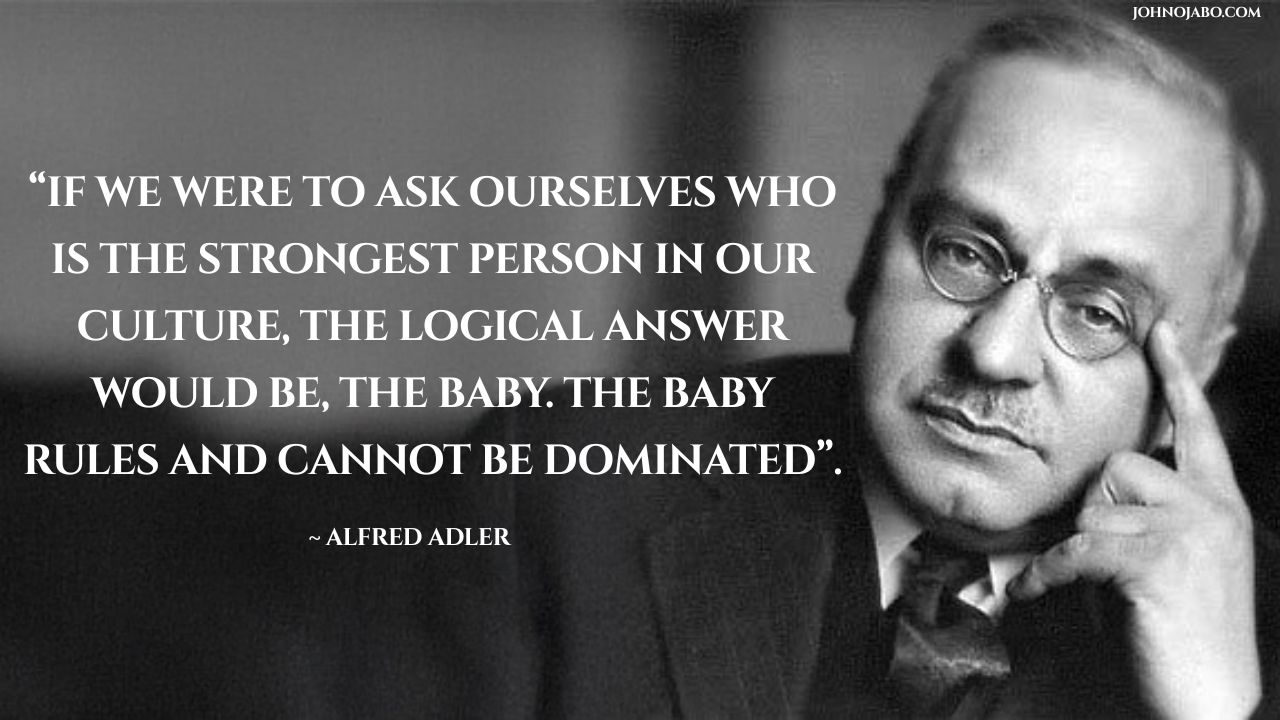
Adler said something striking:
“If we were to ask ourselves who is the strongest person in our culture, the logical answer would be the baby. The baby rules and cannot be dominated.”
At first, it sounds almost ridiculous.
How can a tiny human who can’t walk, feed itself, or survive alone be considered strong?
But Adler wasn’t talking about physical strength — he was talking about influence.
The Baby Rules Through Weakness
A baby has no power in the traditional sense.
No authority.
No independence.
No ability to command.
Yet everyone responds to him.
His cry moves adults.
His needs reorganize the entire house.
His presence changes schedules, sleep patterns, and priorities.
And the interesting part?
You cannot control him the way you control others.
The baby does not negotiate.
He does not pretend.
He does not try to please.
His very helplessness gives him power.
This is the kind of influence that flows naturally from vulnerability — not strength.
The Two-Edged Sword of Vulnerability
The more I thought about this, the more I realized vulnerability is a two-edged sword.
1. Vulnerability creates deep connection
People respond to honesty.
Openness invites support.
When you’re real, people feel safe being real around you too.
Sometimes, admitting “I’m struggling” brings more connection than pretending to be perfect.
2. But vulnerability can also become a strategy
Some people use weakness to avoid responsibility:
- acting helpless to get attention
- depending on others to solve their problems
- expecting constant rescue
Adler calls this the “life-lie” — choosing power through dependence instead of growth.
It looks like weakness, but it’s really a way to control situations while avoiding personal development.
True Strength Is Quiet Confidence
Another thing I learned:
If you really have confidence, you don’t need to boast.
People who truly feel secure don’t shout about their achievements.
They don’t need validation.
They don’t “perform strength.”
But when someone feels deeply inferior, they often:
- exaggerate accomplishments
- seek constant approval
- need everyone to see them as “strong”
This is the superiority complex — an attempt to cover insecurity by displaying the opposite.
In other words, boasting isn’t confidence.
It’s fear disguised as strength.
Choosing Growth Over Dependence
The challenge for all of us is balance:
- Be vulnerable, but don’t use weakness as a shield.
- Be strong, but don’t harden yourself to the point of isolation.
- Be confident, but quietly — without forcing others to see it.
Real growth is learning how to stand on your own while still allowing yourself to be human.
Final Thoughts
Exploring psychology has taught me that:
- real strength is not loud
- real connection comes through openness
- and real confidence doesn’t need applause
Maybe strength isn’t about never being weak…
Maybe it’s about learning when to be open
and when to stand firm.
If you’re on your own journey of self-improvement, I hope this perspective helps you see yourself — and others — more clearly.
More Posts Like This
The Power of Healthy Boundaries